
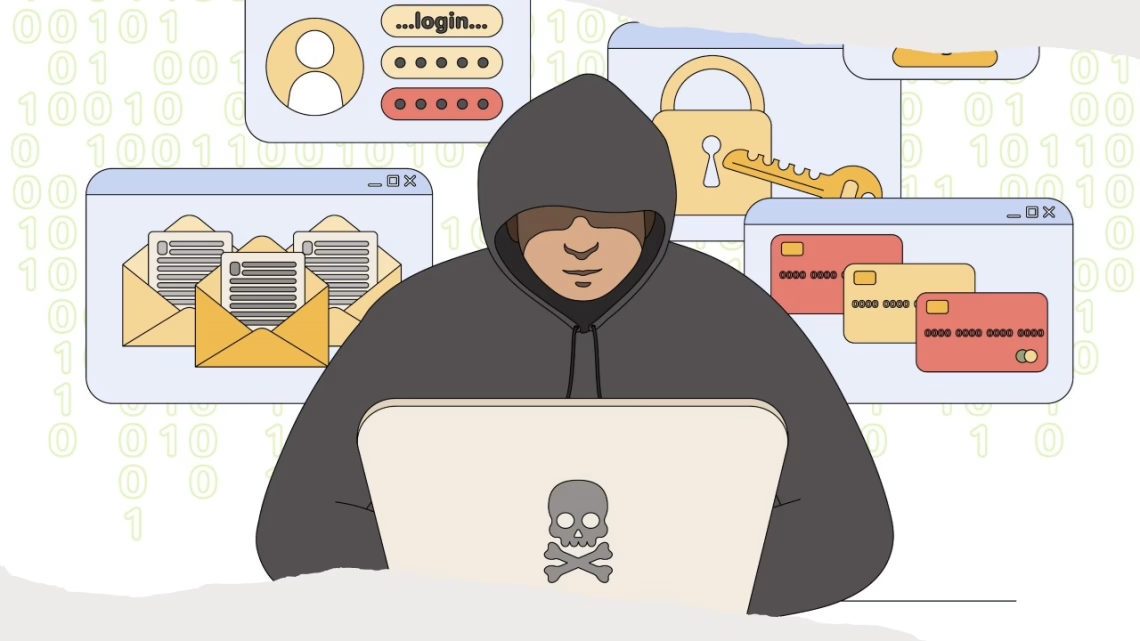
If you want to know about AI and deepfake scams, then you are on the right informative blog. Artificial Intelligence (AI) has transformed our world, powering innovations in healthcare, education, and entertainment. But alongside these benefits, a darker side has emerged: deepfake scams. These scams use AI-generated synthetic media—fake videos, audio, or images—to deceive, manipulate, and exploit unsuspecting individuals. This blog serves as a public service announcement (PSA) to raise awareness, educate readers, and help protect communities from this growing digital danger.
What Are Deepfakes?
Deepfakes are hyper-realistic digital manipulations created using AI algorithms. They can:
- Replace someone’s face in a video.
- Clone voices with uncanny accuracy.
- Fabricate events that never happened.
While some deepfakes are used for harmless entertainment, scammers exploit them for fraud, identity theft, and misinformation campaigns.
Why AI and Deepfake Scams Are Dangerous
Deepfake scams are not just clever tricks—they are serious threats to personal safety, financial security, and public trust. Here’s why:
- 🎭 Identity Theft: Criminals can impersonate loved ones, colleagues, or even CEOs to trick victims into sending money or sensitive data.
- 💰 Financial Fraud: Scammers use deepfake audio to mimic voices in urgent phone calls, convincing employees to transfer funds.
- 📰 Misinformation: Fake videos spread false news, damaging reputations and fueling social unrest.
- 🔒 Privacy Violation: Victims may find their likeness used in malicious or inappropriate content without consent.
Real-World Examples of AI and Deepfake Scams
- Corporate Fraud: In 2020, criminals used AI-generated voice technology to impersonate a company executive, tricking an employee into transferring $243,000.
- Political Manipulation: Deepfake videos have circulated online showing public figures saying things they never said, undermining trust in legitimate information.
- Romance & Social Media Scams: Fraudsters create fake profiles with AI-generated photos and videos to lure victims into emotional or financial exploitation.
These examples highlight the urgent need for vigilance.
How to Spot a AI and Deepfake Scams
Deepfakes are becoming harder to detect, but there are still warning signs:
- 👀 Unnatural Facial Movements: Watch for mismatched lip-syncing or odd blinking patterns.
- 🎤 Voice Inconsistencies: AI-generated voices may sound slightly robotic or lack emotional nuance.
- 📹 Background Distortions: Look for blurred edges or inconsistent lighting.
- 🔍 Source Verification: Always check if the video or audio comes from a trusted, credible source.
Protect Yourself Against Deepfake Scams
Here are proactive steps to safeguard yourself and your community:
- ✅ Verify Before Trusting: If you receive a suspicious video or audio message, confirm directly with the person through another channel.
- ✅ Educate Your Network: Share awareness about deepfake scams with family, friends, and colleagues.
- ✅ Use Security Tools: Employ advanced cybersecurity solutions that detect manipulated media.
- ✅ Report Suspicious Content: Notify authorities or platforms when encountering fraudulent deepfakes.
The Role of Technology Companies regarding AI and Deepfake Scams
Big tech firms are developing detection tools to combat deepfakes. AI-driven solutions can analyze videos for manipulation and flag suspicious content. Social media platforms are also working to remove harmful deepfakes and label synthetic media. However, technology alone is not enough—public awareness remains the strongest defense.
PSA Message: Stay Alert, Stay Safe
Deepfake scams thrive on trust and urgency. Scammers want you to act quickly without questioning authenticity. The best defense is awareness and skepticism.
- Don’t trust urgent requests without verification.
- Don’t share sensitive information based on unverified media.
- Don’t spread suspicious videos or audio clips without fact-checking.
A Call to Action for AI and Deepfake Scams
AI and deepfake scams are not science fiction—they are real, present-day threats. As technology advances, so do the tactics of cybercriminals. This PSA urges everyone to stay informed, stay cautious, and spread awareness. Together, we can build resilience against deception and protect our digital lives.
Final PSA Reminder
⚠️ Think before you trust. Verify before you act. Report before it spreads.
Deepfake scams are dangerous, but with vigilance and education, we can fight back.